
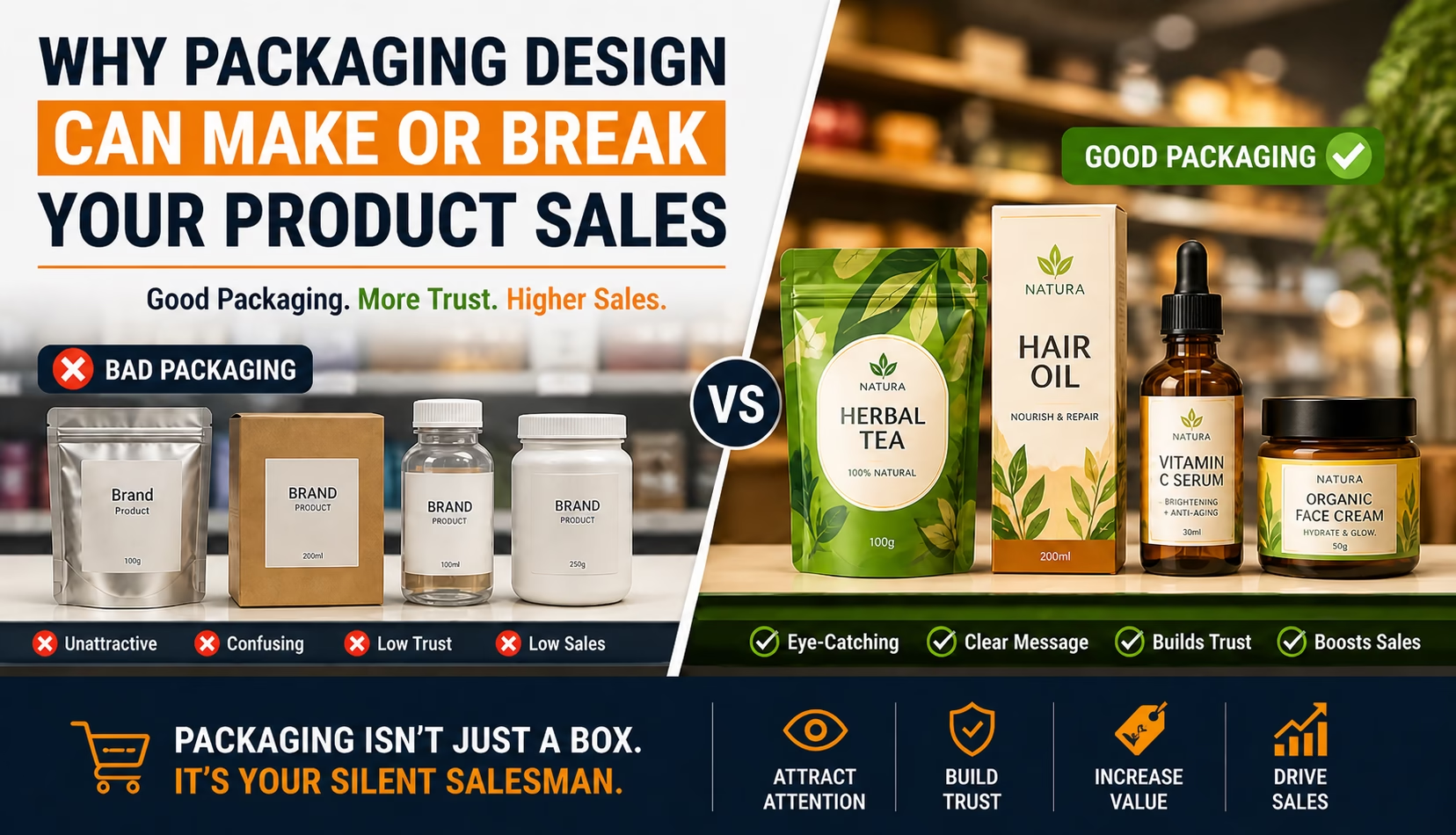
Let’s say the quiet part out loud:
Your packaging is probably doing more selling than your sales team.
Before customers read your ad, visit your website, or talk to your support team, they see your product packaging. And in that tiny moment, they decide whether your product feels trustworthy, premium, cheap, confusing, or worth buying.
That is the real importance of packaging design.
Packaging is not just a box, label, pouch, bottle wrap, or carton. It is your first impression, shelf salesman, trust builder, and brand storyteller all rolled into one physical object.
And if the design is weak?
Your product may be good, but customers may never give it a chance.
If you are comparing different design options and don’t want to waste money on average work, start with this guide on high-quality graphic design services that actually convert.
Table of Contents
- What Is Packaging Design?
- Why Packaging Design Matters for Product Sales
- Packaging Builds Trust Before Customers Try the Product
- Good Packaging Helps Your Product Stand Out
- Poor Packaging Makes Your Product Look Cheap
- Packaging Design Improves Brand Recognition
- Clear Information Helps Customers Decide Faster
- Packaging Design Supports Online Sales Too
- Common Packaging Design Mistakes
- When Should You Redesign Your Packaging?
- Where to Get Professional Packaging Design
- Final Thoughts
- FAQs
What Is Packaging Design?
Packaging design is the process of creating the visual and structural appearance of a product’s packaging.
It includes:
- layout
- colors
- typography
- label design
- product information
- brand elements
- visual hierarchy
- material and print considerations
But here’s the thing most people miss:
Packaging design is not only about making the product look beautiful. It is about helping the customer understand, trust, and choose the product faster.
A pretty package that doesn’t sell is just decoration.
A good package communicates value instantly.
That is why the importance of packaging design is massive for any business selling physical products.
Why Packaging Design Matters for Product Sales
Customers do not always buy the best product.
They often buy the product that looks more reliable, more professional, and easier to understand.
That may sound harsh, but it is true.
Your packaging affects:
- first impression
- product value perception
- customer trust
- shelf visibility
- brand memory
- repeat purchase behavior
Think about a supermarket shelf.
Your product may be sitting beside 10, 20, or even 50 competitors. Nobody is giving your product a full business meeting. Customers scan, judge quickly, and move quickly.
Your packaging needs to win attention in seconds.
If it fails, the sale is gone.
Packaging Builds Trust Before Customers Try the Product
A customer cannot taste, smell, use, or test many products before buying.
So what do they judge first?
The packaging.
Professional packaging tells customers:
- This brand is serious
- This product is safe
- This company cares about quality
- This item is worth the price
Weak packaging says the opposite.
Even if your product is excellent, poor packaging creates doubt. And doubt is a sales killer.
For example, imagine two similar products:
One has clear typography, clean layout, strong branding, and premium color balance.
The other has crowded text, random colors, low-quality images, and no visual structure.
Most customers will choose the first one, even if both products are almost the same.
That is the power of design.
Good Packaging Helps Your Product Stand Out
Standing out does not mean making your packaging loud, messy, or overdesigned.
That is beginner thinking.
Good packaging stands out because it is:
- clear
- memorable
- well-balanced
- easy to identify
- visually different from competitors
The goal is not to scream louder than everyone else.
The goal is to be easier to notice and easier to trust.
This is especially important for:
- food products
- cosmetics
- supplements
- medicine packaging
- skincare products
- electronics accessories
- household items
- retail products
Strong packaging creates shelf impact. It makes people pause for a second. And sometimes, that one second is enough to win the sale.
Poor Packaging Makes Your Product Look Cheap
Let’s be brutally honest.
Bad packaging can make a good product look low quality.
Some common signs of cheap packaging design include:
- too many fonts
- weak color combinations
- poor spacing
- low-resolution images
- unclear product name
- messy information layout
- bad label hierarchy
- no consistent branding
Customers may not know design theory, but they can feel when something looks wrong.
They may not say, “The typography hierarchy is poor.”
They will simply think:
“This doesn’t look professional.”
And then they pick another product.
That is why investing in packaging design is not an extra cost. It is protection against losing sales quietly.
Packaging Design Improves Brand Recognition
Packaging is one of the strongest tools for brand recognition.
When customers repeatedly see your colors, logo, typography, and design style, they start remembering your brand.
This matters because people usually trust familiar brands more than unknown ones.
Strong packaging design helps your brand become recognizable through:
- consistent color palette
- clear logo placement
- repeated visual style
- unique design elements
- memorable product presentation
If you are building a long-term business, packaging should connect with your overall visual identity.
That means your logo, packaging, website, brochures, and marketing materials should feel like they belong to the same brand family.
For a deeper look at this, read this guide on building a strong visual identity for your brand.
Brand consistency is not just “nice to have.” It is how customers remember you.
Clear Information Helps Customers Decide Faster
Customers do not want to solve a puzzle.
They want fast answers.
Your packaging should clearly explain:
- what the product is
- who it is for
- main benefit
- quantity or size
- key features
- usage instructions
- important warnings
- brand name
If the customer has to work too hard to understand your product, they may simply move on.
Good packaging design uses visual hierarchy to guide the eye.
The most important information should be seen first. Supporting details should come after. Legal or technical details should be readable but not visually overpowering.
This is where professional layout skills matter.
A designer is not just placing text. A good designer controls attention.
Packaging Design Supports Online Sales Too
A lot of business owners think packaging only matters for physical shelves.
Wrong.
Packaging matters online, too.
Your product images, mockups, listing thumbnails, social media posts, website banners, and ads all depend on strong packaging visuals.
For e-commerce, good packaging can improve:
- product page trust
- Ad click-through rate
- perceived product value
- social media engagement
- marketplace listing performance
Customers shopping online cannot hold your product. So the visual presentation has to work even harder.
A clean, professional packaging design makes your product look more buyable in images.
And when the packaging looks premium, customers are more likely to believe the product itself is premium.
Common Packaging Design Mistakes
Many businesses lose sales because of packaging mistakes they do not even notice.
Here are the big ones.
1. Trying to Say Everything on the Front
Your front panel is not a newspaper.
If you put too much information on the front, nothing gets attention.
Keep the front clean. Highlight the product name, main benefit, and key selling point.
2. Using Weak Typography
Typography can make or break packaging.
Bad font choices make the product look amateur. Good typography makes it feel premium and reliable.
3. Poor Color Selection
Colors should match the product category, target audience, and brand personality.
Random colors create confusion.
Strategic colors create recognition.
4. No Clear Visual Hierarchy
Customers should instantly know where to look first.
If everything is the same size, same weight, and same importance, the design becomes visual noise.
5. Ignoring Print Requirements
Packaging is not only digital design.
Print-ready packaging must consider:
- dieline
- bleed
- safe margin
- CMYK color
- barcode space
- material finish
- foil, matte, gloss, or spot UV effects
A design may look good on screen but fail in production if it is not prepared properly.
6. Copying Competitors Too Closely
Inspiration is fine.
Copying is dangerous.
Your packaging should fit the market but still give your product its own identity.
Packaging and Brochure Design Should Work Together
Packaging gets attention at the product level.
Brochures, flyers, and catalogs help explain the product more deeply.
This is especially useful for:
- product launches
- trade shows
- retail distribution
- sales meetings
- corporate presentations
- pharmacy or FMCG marketing
When your packaging and brochure design follow the same visual system, your brand looks stronger and more reliable.
You can learn more from this guide on brochure and flyer design tips that convert.
The old-school truth still works: consistent marketing materials build confidence.
When Should You Redesign Your Packaging?
Not every product needs a redesign immediately.
But you should seriously consider redesigning your packaging if:
- Sales are dropping
- Competitors look more modern
- Customers seem confused
- Your product looks outdated
- Your brand identity has changed
- Your packaging does not look good online
- Your product looks cheaper than its actual quality
- Your current design does not match your target audience
A packaging redesign can help reposition your product without changing the product itself.
That is powerful.
Sometimes the product is not the problem.
The presentation is.
Where to Get Professional Packaging Design
If you need packaging that looks professional, builds trust, and supports product sales, working with an experienced designer is the smart move.
You do not need random decoration.
You need packaging that understands:
- branding
- layout
- print production
- customer psychology
- Product positioning
- sales impact
For a professional packaging and label design service, you can check this offer:
Get professional product packaging and label design that helps boost your sales
This is especially helpful if you need packaging for:
- product labels
- cartons
- boxes
- pouches
- bottles
- food packaging
- cosmetics packaging
- retail packaging
- supplement packaging
A good designer will not only make the design attractive. They will make it useful, clear, and commercially stronger.
Final Thoughts
The importance of packaging design is simple:
Customers judge what they see before they judge what they use.
Your packaging can either help your product sell or quietly push customers toward your competitors.
Good packaging builds trust.
Bad packaging creates doubt.
Good packaging increases perceived value.
Bad packaging makes even a strong product look weak.
So if your product deserves attention, give it packaging that can actually fight for that attention.
Because in the real market, your product is not sitting alone. It is standing in a crowd.
Make sure it does not whisper when it should lead.
FAQs
The importance of packaging design is that it helps customers notice, understand, trust, and choose your product. Strong packaging can improve brand perception, increase sales, and make your product stand out from competitors.
Packaging design affects sales by influencing first impressions. Customers often judge product quality based on packaging before they try the product. A professional design can increase trust and make the product feel more valuable.
Effective packaging design is clear, attractive, easy to understand, brand-consistent, and suitable for the target audience. It should highlight the product name, main benefit, and key information without looking crowded.
Yes. Small businesses should invest in packaging design because professional packaging helps them compete with bigger brands, build trust faster, and improve product presentation both online and offline.
You should redesign your product packaging when it looks outdated, does not match your brand, fails to attract customers, creates confusion, or looks weaker than competitor products.
Related graphic design service guides
Use these connected Tanur Graphics guides to compare services, avoid hiring mistakes, and choose the right design support for your business.
For a faster packaging workflow in Adobe Illustrator, read our Pacdora Illustrator Plugin review with practical 3D mockup and dieline guidance.