
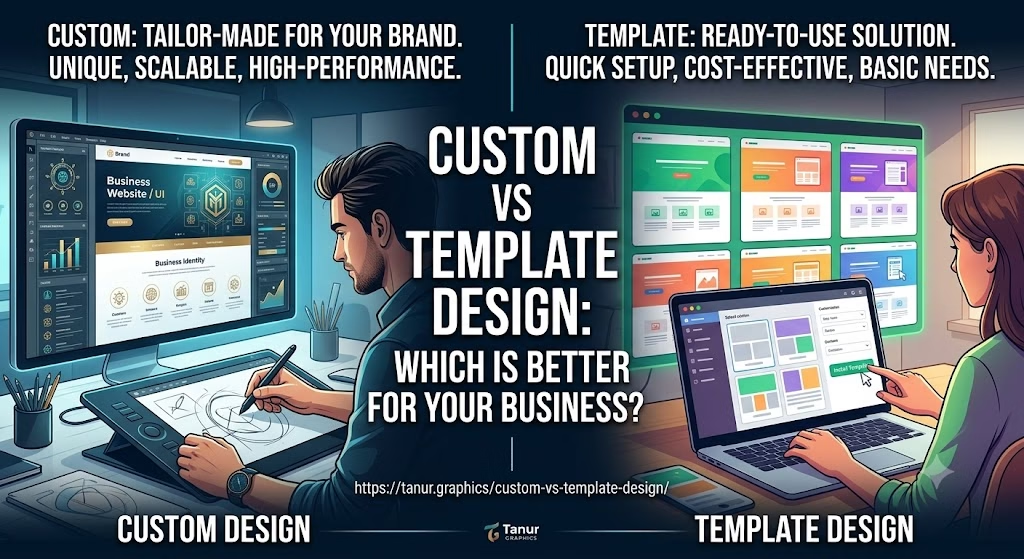
Templates are useful when speed and budget matter more than differentiation. Custom design is useful when the work must fit a specific brand, product, market, or production requirement.
The wrong choice is not always “template.” The wrong choice is using a template where the business needs trust, clarity, or production accuracy that the template cannot provide.
Quick checklist
- Use a template for temporary posts, internal drafts, early idea testing, or low-risk announcements.
- Choose custom design for logos, packaging, catalogs, signage systems, product launches, and high-value sales pages.
- Check if the design needs editable source files, print-ready exports, dieline fitting, or brand consistency.
- Do not use a generic template for regulatory packaging, safety signage, or important product labels without review.
- A good hybrid approach is possible: custom core identity plus reusable templates for daily marketing.
- Track which assets actually support enquiries, sales, or repeat use.
Real proof from Tanur Graphics
Relevant live proof spans custom identity, packaging, print, signage, and web work: ISflex Brand Identity Refresh, Delta 9 Gummies Packaging Design, ReBrickIt Logo & Product Packaging, Restaurant Tri-Fold Menu Design, and Quatum Apex Solutions Website Design.
Pricing context
Current live prices show why scope matters: poster/flyer work starts from $85, packaging from $180, brand identity from $250, and small WordPress websites from $600. Template edits may be cheaper, but custom work is better when the outcome affects trust or production.
Next step
If the design will be reused across packaging, website, ads, and print, custom design usually gives stronger long-term value. If it is a one-off low-risk post, a template may be enough.