
How to Write a UAE Luxury Packaging Design Brief Without Copying Competitors
Luxury packaging in the UAE often competes in visually crowded fragrance, beauty, gifting, hospitality and premium-food categories. The fastest way to lose distinction is to brief a designer with “make it look like this competitor.” A stronger UAE luxury packaging design brief explains the position, customer, product and production constraints that should make the brand recognisable on its own.
The goal is not decoration for decoration’s sake. It is a packaging system that signals value quickly, protects the product, works across sales channels and remains practical to manufacture.
Start with the commercial position
Describe where the product sits and why a buyer should choose it. Is it an accessible premium gift, a limited-edition fragrance, a modern wellness product or a heritage-inspired food range? Name the buying occasion, expected price band, sales channel and closest alternatives.
Then define three to five qualities the packaging must communicate. “Precise, warm and contemporary” is more useful than “luxurious.” Add qualities to avoid, such as ornate, clinical, youthful or traditional, when they would send the wrong signal.
If the wider identity is still unclear, review branding basics for small businesses before committing to a package architecture.
Give cultural context without using stereotypes
Explain the intended audience, languages, locations and gifting conventions. Include any Arabic and English copy requirements early because the writing systems may affect hierarchy, spacing and panel balance. Supply approved translations and identify which language should lead in each market.
Avoid treating “Middle Eastern luxury” as a visual shortcut for heavy gold, arches or generic geometric patterns. Cultural cues should come from the brand story and audience research, not a stock motif. A distinctive contemporary system can still use regional materials, craft references or bilingual typography with care.
Separate inspiration from imitation
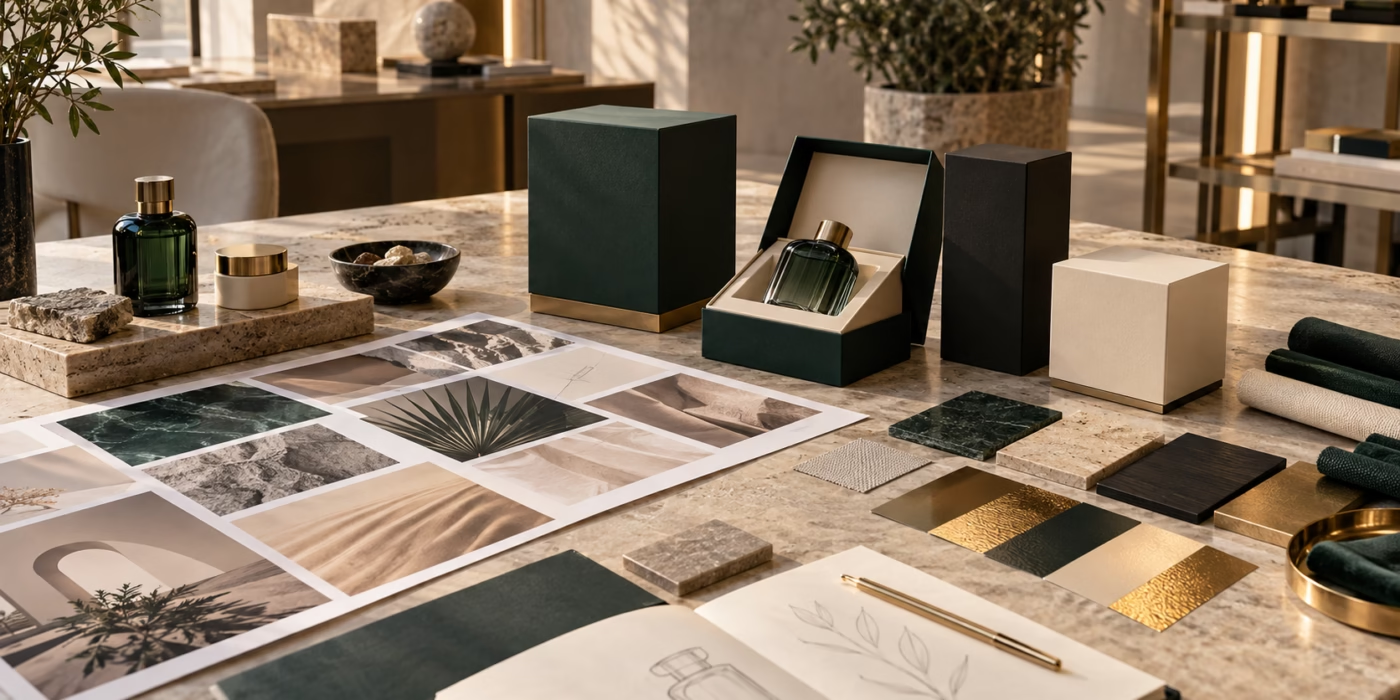
Create an inspiration board with several sources: architecture, interiors, fashion, materials, nature, editorial design and product experiences. For every reference, write what is relevant—contrast, restraint, tactility, colour temperature, opening sequence or information hierarchy.
Do not ask to reproduce another company’s monogram, bottle silhouette, colour combination or ornament. Search existing marks and raise obvious conflicts before the artwork is final. The WIPO Global Brand Database is a useful research starting point, but it does not replace professional trade-mark advice.
Define the packaging architecture
List every component and its role:
- primary container, label, carton or rigid box;
- insert, sleeve, tissue, ribbon or closure;
- shipping protection and ecommerce presentation;
- gift bag, card or launch materials;
- SKU, size, fragrance or shade variations;
- required seals, barcodes and product information.
Provide manufacturer dielines whenever possible. Use the packaging artwork preflight checklist to collect dimensions, folds, bleed, safe areas and production notes before the design is approved.
Make material and finish decisions intentionally
Luxury can come from proportion, restraint and tactile quality—not only expensive finishes. Ask the supplier what is achievable at the order quantity and test:
- coated versus uncoated stocks;
- rigid board thickness and edge quality;
- foil, embossing, debossing or spot coatings;
- soft-touch, textured or natural surfaces;
- colour consistency across different substrates;
- durability in heat, handling and shipping.
State sustainability goals precisely. “Eco-friendly” is too broad. Define whether the priority is lower material weight, recycled content, recyclability, fewer mixed materials, refillability or reusable structure. Keep environmental claims evidence-based.
Plan a clear information hierarchy
The front should help the right buyer recognise the brand, product type, variant and value level quickly. Secondary panels carry instructions, ingredients, company details and approved legal information. For ecommerce, the packaging must also remain legible in thumbnails and product imagery.
Read why packaging design can make or break product sales and test the design in both shelf and digital contexts.
Specify deliverables and approvals
An effective brief states the number of concepts, revision rounds, final SKUs, mockups and file types. Name the client approver, manufacturer contact and any regulatory reviewer. Confirm who supplies translations, barcodes, copy and legal claims.
The final package should include print-ready artwork built on the approved dieline, editable source files when included, preview exports and a clear record of special finishes. A 3D mockup can help stakeholders understand the concept; the Pacdora packaging workflow review shows one option, but final production still requires printer review and proofing.
UAE luxury packaging design brief checklist
- Position, price level and buying occasion are clear.
- Audience, markets and language hierarchy are defined.
- References explain principles rather than request copies.
- Structure, components and SKU count are confirmed.
- Approved copy and translations are supplied.
- Materials and finishes match budget and quantity.
- Ecommerce, retail and gifting contexts are tested.
- Manufacturer proofing and final approval owners are named.
Build a premium system that belongs to your brand
Tanur Graphics creates packaging and identity systems for international product launches with clear scope, print-ready files and practical mockups. Request a packaging design quote with your product category, target market, dieline, languages, quantity, deadline and budget range.
Frequently asked questions
How can UAE luxury packaging look premium without using too much gold?
Use disciplined proportion, typography, colour, materials, structure and tactile contrast. A restrained system often feels more distinctive and credible than applying metallic finishes everywhere.
Can I send competitor packaging in the design brief?
Yes, as a reference for principles such as hierarchy or material quality. Explain what you are learning from it and ask for an original solution rather than copying protected or recognisable features.
Who should approve bilingual packaging copy?
The client should supply approved Arabic and English copy and arrange appropriate legal or regulatory review. The designer can create the hierarchy and layout but should not invent translations or claims.