
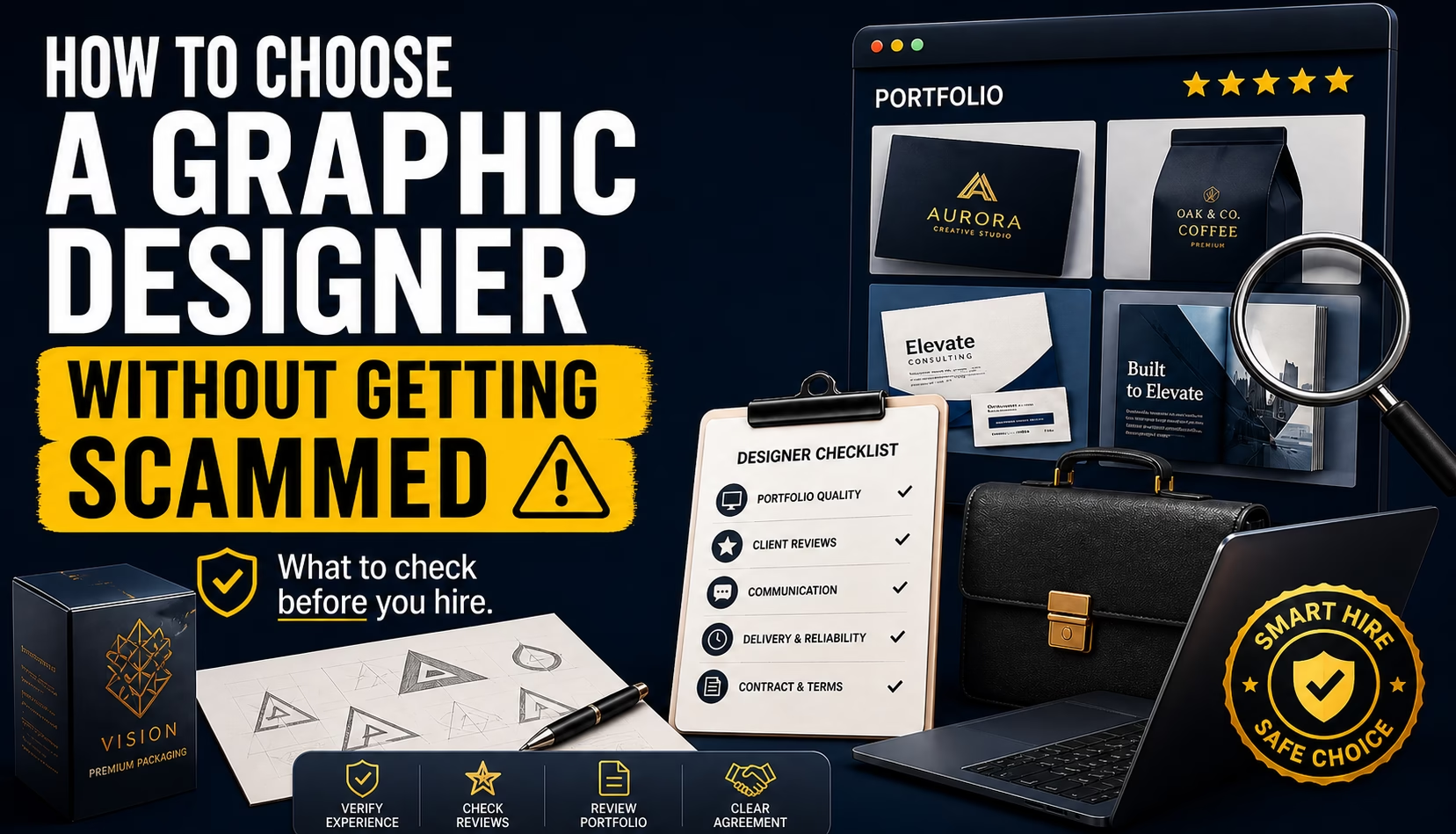
Hiring a designer online sounds easy.
Until you actually do it.
You post a job, receive 50 offers, check a few portfolios, and suddenly everyone claims to be “professional,” “creative,” and “brand-focused.”
Nice words.
But nice words don’t save you from bad design.
If you’re wondering how to choose a graphic designer without wasting money, this guide will help you make a smarter decision before hiring anyone.
Because the truth is simple: the wrong designer can cost you time, money, brand trust, and a serious headache.
Table of Contents
- Why Choosing the Right Designer Matters
- Check Real Experience First
- Review the Portfolio Carefully
- Look for the Right Specialization
- Check Reviews and Completed Projects
- Be Careful with Extremely Cheap Offers
- Test Their Communication Style
- Understand Their Design Process
- Ask the Right Questions Before Hiring
- Red Flags to Avoid
- Recommended Design Services
- Final Thoughts
- FAQs
Why Choosing the Right Designer Matters
Design is not just decoration.
It affects how people judge your business before they read a single word.
A good designer can help you build trust, improve brand recognition, and increase conversions. A bad designer can make your business look cheap, confusing, or unreliable.
That is why choosing the right graphic designer matters so much.
Whether you need a logo, product packaging, brochure, website, or custom graphic design, your designer must understand both visuals and business goals.
If you want a full list of reliable design options, check this guide on high-quality graphic design services online.
Check Real Experience First
Experience is not everything, but it matters.
A designer with real project experience usually understands deadlines, revisions, print requirements, file formats, branding consistency, and client expectations.
Before hiring, check:
- How long they have worked in design
- How many projects they have completed
- Whether they understand your industry
- Whether they can explain their design decisions
A beginner may create something beautiful. But an experienced designer knows how to create something useful.
That difference is huge.
Pretty design gets attention.
Strategic design gets results.
Review the Portfolio Carefully
A portfolio is not just a gallery.
It is proof.
When checking a designer’s portfolio, don’t only look for attractive designs. Look for variety, quality, consistency, and real-world usability.
Ask yourself:
- Does the work look professional?
- Are the layouts clean and readable?
- Do the designs match different industries?
- Does the designer show attention to detail?
- Would you trust a brand that uses this design?
For example, a logo portfolio should show clean, memorable, and scalable marks; similarly, a packaging portfolio should show strong shelf appeal, clear hierarchy, and product trust.
If you are planning to build a brand identity soon, this upcoming guide on logo design mistakes that hurt your brand will help you avoid common problems.
Look for the Right Specialization
Therefore, not every designer is right for every job.
That is where many clients make a big mistake.
A social media designer may not be the best packaging designer.
A logo designer may not be the best website designer.
A website designer may not understand print production.
So before hiring, match the designer’s skill with your project type.
For example:
- Need a logo? Hire someone strong in branding.
- Need packaging? Hire someone who understands labels, cartons, print files, and shelf impact.
- Need flyers or brochures? Hire someone who understands layout and marketing flow.
- Need safety signs? Hire someone who understands clarity and visual communication.
If your product depends on shelf appeal, this guide on why packaging design can make or break product sales will be useful after publishing.
Choosing a specialist is not overthinking. It is basic survival.
Check Reviews and Completed Projects
Reviews are your shortcut to reality.
A designer’s profile may look polished, but reviews reveal what actually happens after payment.
Look for signs like:
- Repeat buyers
- Clear communication
- On-time delivery
- Positive comments about quality
- Successful project completion
- Good revision handling
For example, a designer with hundreds of completed projects and many five-star reviews is usually safer than someone with no track record.
That does not mean new designers are bad; however, if your business project is important, proven reliability matters.
No one wants to discover “creative chaos” after placing an order.
Be Careful with Extremely Cheap Offers
Let’s be honest.
Everyone wants a good deal.
But extremely cheap design often becomes expensive later.
Why?
Because you may need to pay again to fix:
- Poor layout
- Wrong file format
- Low-resolution output
- Weak branding
- Bad typography
- Unusable print files
- Generic template design
Cheap design is fine for small experiments. But for serious business assets, you need quality.
Indeed, a logo, packaging design, or website is not just one file; rather, it becomes part of your brand identity.
Don’t just ask, “What’s the cost?”
Ask, “What will this design help me achieve?”
That question changes the whole game.
Test Their Communication Style
Good design starts with good communication.
Before hiring a graphic designer, notice how they respond.
Do they ask useful questions?
Do they understand your goal?
Do they explain clearly?
Do they sound professional?
A good designer will not just say, “Yes, I can do it.”
They will try to understand:
- Your business
- Your target audience
- Your preferred style
- Your competitors
- Your deadline
- Your required file formats
Bad communication in the beginning usually becomes a bigger problem later.
If the designer does not understand the brief, the final design will probably miss the target.
Simple math. Painful result.
Understand Their Design Process
A professional designer should have a process.
It does not need to be complicated, but it should be clear.
A simple design process may include:
- Understanding the brief
- Researching the brand or industry
- Creating initial concepts
- Getting client feedback
- Making revisions
- Preparing final files
This process protects both sides.
You know what to expect.
The designer knows what to deliver.
Before placing an order, ask what is included:
- How many concepts?
- How many revisions?
- What file formats?
- What is the delivery time?
- Is source file included?
- Is commercial use included?
Never assume. Always confirm.
Ask the Right Questions Before Hiring
If you want to know how to choose a graphic designer, ask better questions.
Here are some smart questions before hiring:
- Have you worked on similar projects before?
- Can you show relevant samples?
- What information do you need from me?
- What file formats will I receive?
- How many revisions are included?
- Will the design be custom or template-based?
- Can I use the design commercially?
- What happens if I need changes later?
These questions help you filter serious designers from random sellers.
A professional designer will answer clearly.
A weak one will dodge, blur, or oversell.
Watch carefully.
Red Flags to Avoid
Now let’s talk danger signs.
Avoid designers who:
- Have no clear portfolio
- Use stolen or generic samples
- Offer unrealistic delivery for complex work
- Don’t ask questions about your project
- Promise everything for almost nothing
- Refuse to explain file formats
- Have poor communication
- Push you to order before understanding the brief
Also avoid anyone who says every design style is easy.
That usually means they don’t understand the work deeply.
Good design has rules, structure, and purpose. It is not random decoration thrown into a blender.
Recommended Design Services
If you need a reliable place to start, here are two useful services depending on your project.
For brand identity, you can explore this simple and unique logo design service. It is useful if you need a clean, practical logo that works across digital and print platforms.
If you already have an idea but need someone to turn it into a polished visual, check this custom graphic design service from any idea. This is helpful for business owners who know what they want but need professional execution.
You can also read the main guide on where to find graphic design services that actually convert for more service options.
Final Thoughts
Moreover, don’t let price be the only compass guiding you to your next graphic designer.
It is about finding the right person.
A good designer understands your business, communicates clearly, provides demonstrable results, and delivers usable files; in other words, they possess a multifaceted skillset.
So before hiring, slow down and check the basics:
- Experience
- Portfolio
- Specialization
- Reviews
- Communication
- Process
- File delivery
That is how you avoid scams, weak work, and wasted money.
A good designer does not just make your business look better.
A good designer helps your business feel more trustworthy before the customer even talks to you.
And that is where design starts doing its real job.
FAQs
Choose a graphic designer by checking their portfolio, experience, reviews, communication style, and specialization. Make sure they understand your project goals before hiring.
Before hiring a freelance designer, check their previous work, client reviews, delivery process, revision policy, file formats, and whether they offer commercial usage rights.
A professional designer communicates clearly, asks relevant questions, explains the process, delivers proper files, and has a portfolio that matches your project needs.
Not always. Cheap design can cost more later if the quality is poor or the files are unusable. Choose based on value, not price alone.
The safest way is to hire through a trusted platform, review the designer’s completed projects, read client feedback, and confirm all project details before placing an order.
Related graphic design service guides
Use these connected Tanur Graphics guides to compare services, avoid hiring mistakes, and choose the right design support for your business.
- Stop Overpaying for Design
- Why Packaging Design Can Make or Break Product Sales
- Logo Design Mistakes That Hurt Your Brand
- Custom vs Template Design
- Brochure Design Tips
- Professional Website vs DIY Website
- Background Removal for Ecommerce
- Safety Sign Design Guidelines
- Branding Basics for Small Business